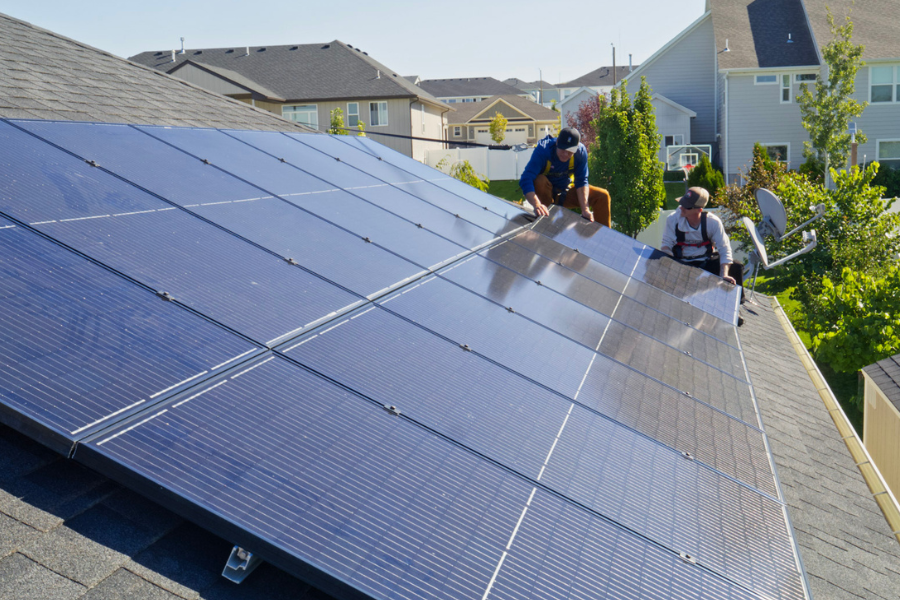
If your solar panels are already doing their job, it is natural to wonder whether you can add battery storage without starting over. The short answer is yes. Battery backup can often be added to an existing grid-tied solar system, but the right approach depends on the equipment already in place and what you want the battery to accomplish.
Our residential solar with backup batteries service is designed around the way a home actually uses power. For an existing solar customer, that means looking closely at the current array, inverter, electrical panel, available space, and the loads you want supported during an outage. A battery retrofit is not just an accessory purchase. It is an electrical integration project that needs to work safely with the system you already own.
If you are considering an upgrade, our goal is to help you understand what can be reused, what may need to change, and how storage can fit into your larger energy plan. The process starts with the existing system, not with a one-size-fits-all battery recommendation.
Yes, Battery Backup Can Often Be Added After Solar Installation
For many homeowners, solar and battery storage happen in stages. You may have installed solar first, then decided later that outage protection or stored energy would be valuable. That is a common path, and modern battery systems can often be integrated with an existing grid-tied array.
The important word is “integrated.” The battery has to operate correctly with the solar equipment, the home’s electrical system, and the utility connection. Depending on the design, it may work with the current inverter or require additional equipment to operate alongside the solar array.
Our team at Big Dog Solar evaluates those details before recommending a retrofit. We are not trying to replace equipment that still serves a useful purpose. We are trying to build a storage solution that works with the existing system and supports the goals you have now.
What We Evaluate Before Adding a Battery
An existing solar system gives us a starting point, but no two retrofits are exactly alike. The first step is understanding how the current equipment is configured and how power moves between the panels, inverter, home, and grid.
We look at the inverter type, the electrical panel, the solar system layout, and the available location for battery equipment. We also need to understand your household usage and what you want the battery to do. A homeowner who wants to keep a refrigerator, lights, internet, and a few outlets running during an outage has a different design goal from someone who wants broader backup coverage.
Those details affect system design. A battery is only useful when the installation is built around realistic loads and the electrical equipment can manage the transition between grid power, solar production, and stored energy.
If your original system was built as standard residential solar, adding storage can expand what the system can do without changing the basic purpose of the solar array. The panels continue producing electricity, while the battery adds another place for energy to go and another source of power when conditions call for it.

How a Battery Retrofit Works with Your Existing Solar
Solar panels produce electricity whenever sunlight is available. Without battery storage, a grid-tied system typically uses that production in the home and interacts with the utility grid according to the system design and local utility rules. A battery adds storage to that energy flow.
When the battery is integrated properly, available energy can be stored for later rather than being used only at the moment it is produced. During a grid outage, the backup system can isolate the supported portion of the home from the utility and use stored energy for the loads the system was designed to serve.
The exact equipment path depends on compatibility. Some systems can incorporate a battery through the existing inverter architecture. Others may use an additional component or an AC-coupled approach. We determine that during design rather than assuming every system should be modified the same way.
This is one reason professional installation matters. The retrofit has to protect the home, the solar equipment, utility workers, and the battery system itself while coordinating multiple sources of power.
What Battery Backup Can Change During an Outage
One of the biggest reasons homeowners add storage later is that solar panels alone do not automatically mean the home will have usable power during a utility outage. A standard grid-tied system is designed to shut down when the grid fails unless it includes equipment that can safely provide backup power.
A properly designed battery system changes that experience. Stored energy can support the circuits included in the backup design, giving you power for selected household needs while the grid is unavailable. The amount of equipment you can support depends on the battery system and the loads chosen during design.
We focus on priorities instead of promising that every home should back up every device. Heating equipment, refrigeration, water systems, communications, lighting, and important outlets may all matter, but the right combination depends on your household.
For homeowners in places such as Grand Junction, CO, where weather and grid interruptions can make backup planning especially relevant, a battery retrofit can turn an existing solar investment into a more resilient home energy system.
Battery Storage Can Also Add Everyday Energy Flexibility
Backup power gets most of the attention, but storage is not useful only when the grid fails. A battery can also give you more control over when stored electricity is used.
Depending on your utility structure and system settings, stored energy may help reduce the amount of electricity you need from the grid during certain periods. It can also allow you to hold some solar production for later in the day instead of using all of your solar energy as it is generated.
That does not mean every battery retrofit creates the same financial result. Utility rates, household usage, solar production, and battery settings all matter, so we evaluate those factors instead of making a blanket savings promise.
The larger point is that adding storage can make an existing solar system more flexible. You keep the solar production you already have and add a tool for managing some of that energy differently.
Why Compatibility Matters More Than the Age of the Solar Panels
Homeowners often assume the age of the panels is the main question. In practice, the more important issue is how the existing electrical and solar equipment can interface with the new battery system.
An older solar array may still be producing useful electricity, while a newer array may have an inverter or electrical configuration that requires a particular integration approach. That is why a visual inspection and equipment review matter more than a simple rule based on installation year.
We also consider whether the electrical panel and available installation area support the proposed battery setup. If changes are needed, those changes should be identified before installation begins so the retrofit is designed as one coordinated system.
Our approach is to preserve what works, address what does not, and build the upgrade around safety, compatibility, and your backup goals.

Plan the Upgrade Around Your Next Energy Goal
Adding a battery is a good time to think beyond the immediate outage scenario. Your household may use more electricity in the future because of new appliances, home improvements, work-from-home needs, or other changes. Your backup priorities may also evolve.
You do not need to predict every future purchase, but the battery discussion should include where your energy use is headed, not just where it is today. A system designed around realistic priorities is more useful than one chosen only because a particular battery is popular.
We help homeowners connect the existing solar system with the next step in their energy plan. The result should feel like an upgrade to the home, not a patchwork of unrelated equipment.
Turn Your Existing Solar System Into a Backup-Ready System
If you already have solar, you may be closer to battery backup than you think. The next step is confirming what equipment you have, what can be integrated, and which loads you want supported when grid power is unavailable.
Our team can review your existing system and build a battery plan around your home instead of forcing a generic configuration onto it. Contact us to discuss your current solar setup, your backup priorities, and the options that make sense for your property.
Related Questions
Do I have to replace my solar panels to add a battery?
Not necessarily. A battery retrofit can often use the solar array that is already installed. The key question is how the existing inverter and electrical configuration can be integrated with the new storage equipment.
Can a battery be added if another company installed my solar?
An existing system can still be evaluated for a battery upgrade even if it was installed by another provider. We need to review the equipment and configuration before determining what integration approach is appropriate.
Will adding a battery change how my solar panels produce electricity?
The panels continue producing electricity from sunlight as they did before. The battery changes how some of that electricity can be stored and used, depending on system design and operating settings.
Can I choose which parts of my home receive backup power?
Backup design can be built around selected loads or broader household needs. We review the electrical demands you consider most important and design the supported circuits around the capabilities of the system.